
By Mark Bennett
One winter my lemon tree lost so many leaves that I thought it had died. Then I took it back outside in spring, and fresh green leaves began to open on those bare branches.
Before you water, press a finger about 2 inches (5 cm) into the potting mix. Still damp? Look underneath the pot. Dry at that depth? Water slowly and see where the water goes. Wet roots and dry roots can leave you with much the same pile of leaves on the floor.
Did it start after a move indoors, after a cold night, or when the heating came on? If the branches are already bare, here’s how to check for recovery.
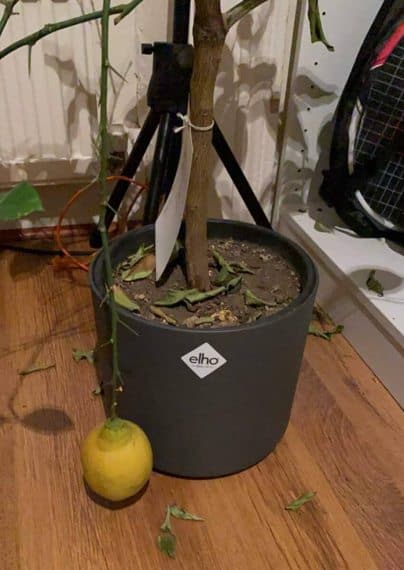
1. Is the pot still wet from the last watering?
Lift the growing pot out of its decorative pot. Is there water underneath? A lemon on a patio can drain straight onto the ground. Bring that same tree indoors, slip it into a nice pot to protect the floor, and suddenly the roots are sitting in the last inch of every drink you give it.
Empty the outer pot or saucer and check that the holes in the base of the growing pot are clear. If the lemon is planted directly into a container with no drainage hole, move it to one that drains. You can slip it back into the decorative pot once the dripping stops.
What if the surface looks dry but the pot still feels heavy? A reader with a Meyer lemon described a gritty mix that felt slightly damp and never formed a clump. It was so hard to judge that only the surface was getting watered.
If that sounds familiar, try a plain wooden skewer. Ease it into the mix away from the trunk, then draw it out. Darkened wood or damp crumbs farther down tell you there’s still moisture under that dry crust.
When is it worth looking at the roots? If you watered recently, damp mix is exactly what you’d expect. I’d only look at the roots if the mix stays sodden between checks and the tree keeps shedding.
Slide the root ball out gently if the pot is manageable. If the roots feel firm, put the tree back in its pot. Soft roots that fall apart between your fingers have rotted. Trim the damaged parts with clean pruners, keep the firm roots and use fresh, free-draining citrus mix. Choose a pot that just accommodates what’s left.
2. Is water running straight down the sides?
Water pouring out of the bottom looks reassuring. Sometimes it’s gone straight past the roots. Look around the inside rim for a gap where the mix has pulled away from the pot. If the middle still feels dry after watering and the pot is surprisingly light, that gap may have taken most of the water.
I once stood a parched lemon tree in a wheelbarrow full of water. The whole pot floated! I had to hold it down for the first few minutes while the mix took up water. That helped explain why my earlier watering had made so little difference.
For a small pot in that state, put the growing pot in a basin of water. Keep the water below the rim and let it enter through the drainage holes. Check the middle of the root ball. Once it’s evenly damp, lift the pot out and let the excess drain before returning it to its usual spot.
A big patio tub can stay where it is. Water slowly over the whole surface, pause to let the first pass soak in, then go round again. Check one spot nearer the middle as well as the outside edge. If both are damp, you’ve reached the part of the pot you were trying to water.
Before you walk away, lift one edge of a small, freshly drained pot. That weight makes a handy reference the next time the top looks dry. A pot that still feels nearly as heavy several days later can wait for another soil check.
3. Did the leaves start falling when you brought it inside?
Think back to the last place where your lemon held its leaves. If it spent months looking good on the patio and began shedding a few days after coming inside, the timing is a clue. It lost hours of daylight, exchanged outdoor air for a heated room and probably started drying out at a different rate, all in one afternoon.
The same thing can happen with a lemon you’ve just bought. Picture the light coming through the roof of a garden center greenhouse, then look at the little patch of sky visible from your living room window. The tree can go through quite a change even if it only travelled a few miles.
Once you’ve checked the pot, give the tree a settled place by a sunny window and see what happens to the leaves still attached. I’d leave a healthy root ball alone. A bigger pot would surround the roots with extra mix when the tree may already be using water more slowly. If the fall of leaves slows, give it time there.
Next fall you can make that trip indoors gentler. While the nights are still mild, move the pot from the open patio into partial shade for a few days before bringing it in. If frost is due tonight, get the lemon under cover now. There’ll be time to find the best window once it’s safe inside.
4. How much sun actually reaches the leaves?
Stand beside your tree on a clear day and look for the patch of sun. Is it catching the branches, or lighting up the rug a few feet away? A room can feel beautifully bright to us while a lemon tucked alongside the window spends most of the day in shade.
Check again around midday and later in the afternoon. Your kitchen might get lovely morning sun for breakfast and none at all by the time you make a second cup. In the US, a clear south-facing window is a good starting point. For a potted lemon, aim for at least six hours of direct sun where you can get it.
Look outside that window, too. A porch roof or an evergreen hedge can shade the glass for much of the day. If the only sunny patch is right beside a cold pane, bring the pot forward just far enough for the leaves to clear the glass. I’ve grown a lemon by French windows as well as in a glass porch. What matters in either spot is how much light reaches the crown.
Pro tip: When winter daylight fell short, a citrus grower suggested I try a grow light. I hung one above my tree and ran it for two extra hours in the evening. That winter it held on to noticeably more leaves. Mine already had a sunny window. If yours gets very little daylight, follow the lamp maker’s guidance on distance and hours.
5. How cold did it get last night?
I once missed an overnight dip to 40°F (about 4°C). By morning my lemon looked miserable, and there were leaves on the ground. The patio had felt perfectly pleasant the afternoon before. Now it’s the overnight low I look up when my tree is still outside in fall.
When nights approach 50°F (10°C), I get its winter spot ready. Some varieties tolerate cooler nights than others. If frost is forecast, bring the pot into a bright, frost-free spot before nightfall.
One reader described green leaves dropping from a lemon beside a sunny glass door with drapes drawn at night. If yours lives there too, notice which side of the closed drape the branches end up on. A thermometer beside the tree first thing in the morning will tell you more about that little pocket of air than the thermostat across the room.
If the tree actually froze, leave the bare branches for now. It takes time for the extent of frost injury to show. When spring growth is well under way, you’ll be able to see which wood is carrying new leaves and where a damaged tip has died back. It’s easy to cut off a living branch by guessing in winter.
6. Can you feel warm air blowing through the branches?
See where the radiator sits in the photo below? That’s the awkward thing about finding a sunny winter home for a lemon. The very place that gets the best light can also get a blast of hot air whenever the heating comes on.
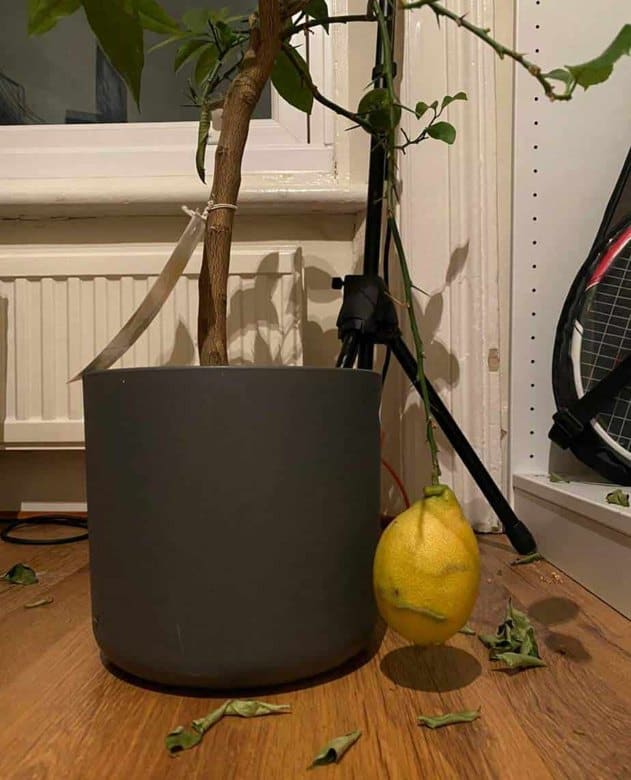
Hold your hand among the leaves while the heat is running. Try the window side and the room side. If you can feel a warm current in one half of the crown, slide the pot sideways out of its path and check again. Sometimes a small move along the same window is all it takes to keep the sunshine and get the leaves out of the draft.
Can the air be dry while the soil is wet? Absolutely. That’s why I’d deal with the vent before reaching for the watering can. Dry air around a branch tells you very little about moisture halfway down the pot. If the whole room is dry, a humidifier is an option. I found one more useful for my own lemon than repeatedly misting the foliage.
7. Are the leaves speckled, webbed or sticky?
Choose a leaf that’s still attached, especially one beside a patch that has already gone bare. Look at the upper surface for little pale pinpricks, then turn it over and check along the midrib and where the leaf meets its stalk. Fine webbing across those sheltered spots can be a sign of spider mites.
Hold a sheet of white paper under the affected branch and give the branch a tap. Watch the specks that land on the paper. If some start crawling and the leaves have that fine stippling, you have a much better reason to suspect mites. A phone camera on zoom can help if you find the specks hard to see.
Move an affected lemon clear of your other plants. A small tree can go in the shower. Cover the potting mix, rinse the leaves gently, especially underneath, and uncover the pot afterwards. Check the neighbouring plants and repeat the paper test over the following days. The old pale dots will stay, so look for live mites and fresh damage on leaves that were clean.
Sticky leaves give you a different clue. Look along the veins and twigs for small, raised brown bumps. Scale insects can produce the sticky honeydew you find on the leaves or even on the windowsill below. White cottony tufts in the leaf joints point toward mealybugs. If you need a treatment, identify the pest first and choose a product labelled for that pest on edible citrus in the setting where you’ll use it.
Will my lemon tree grow its leaves back?
Mine did. It lost nearly all its leaves one winter, and when I took it outside again in spring, little green leaves began to open on branches I’d thought were finished. A bare branch can still carry living buds. How much of your own tree comes back depends on the condition of its roots and wood.
What if it still has lemons on it?
One reader had four lemons hanging on a tree that was losing its leaves. I can understand wanting to save every one of them. Pick any that are ripe. If a small, sparsely leafed tree is carrying a heavy crop of young fruit, thin some so it has fewer to support. A lemon still hanging from its stalk tells you very little about whether the pot needs another drink today.
What should I look for over the next few weeks?
Sweep up the old leaves today. Take a photo of the tree from the side where you can see the bare twigs most clearly. Over the next few days, look for a smaller scattering of freshly fallen leaves. Later, compare those same twigs with the photo and look for swelling buds or the first folded leaf beginning to open.
If the pot is still soggy and fresh leaves keep dropping, go back to the drainage check. If the mix is drying normally and the remaining leaves are holding, you can give the tree time. On a quiet winter windowsill, the next flush may wait until spring. Save the citrus fertiliser for when the tree is actively growing again.

On a grafted lemon, check where that first shoot appears. Look low on the trunk for the slight bend or join where the named lemon variety was grafted onto its roots. New leaves above that point mean your lemon is growing again.
A vigorous shoot below the join belongs to the rootstock. Remove shoots you can identify as rootstock, and give the upper branches time to show where they’re still alive. If you can’t find a graft, check how your tree was propagated before cutting. Some lemons are grown from cuttings on their own roots.
Once frost danger has passed, give any tender new leaves an easy trip back outside. Start the pot in partial shade and work it into stronger sun over about two weeks. After nursing a lemon through a winter indoors, the last thing you want is to scorch its first new flush on a bright spring afternoon.
Do you have any questions about your lemon tree and how to care for it? Please leave a comment below, and I’ll reply!
Recent Posts
Find out what your moth orchid needs next; from healthier roots to the right place on your windowsill. By Mark Bennett The last flower has fallen, and your orchid is looking rather bare....
Indoor palm trees are some of the most elegant houseplants you can grow, and they are exceptionally easy to care for once you know their preferred conditions. The key is to mimic some of the...